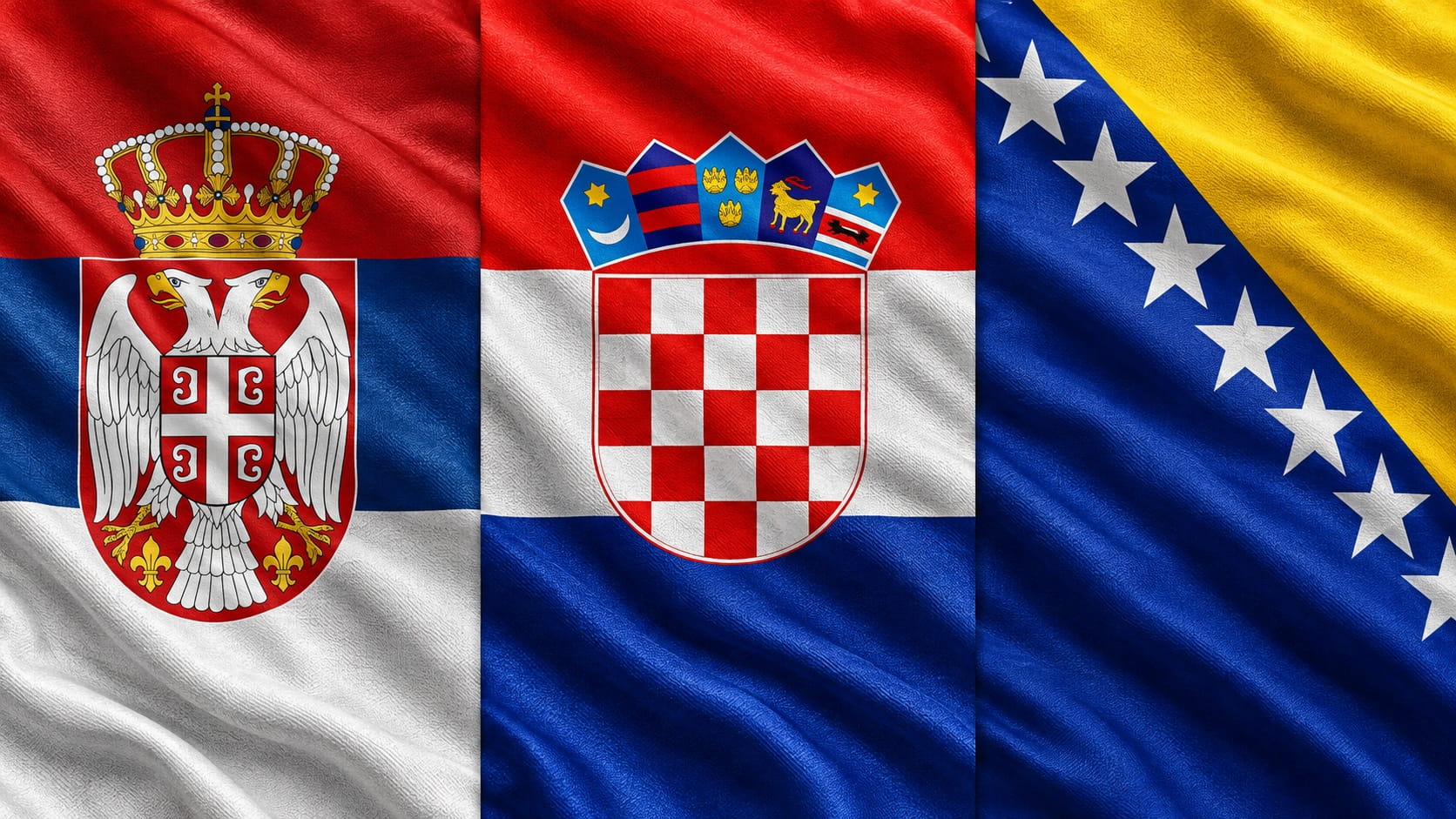
Does birthplace in Croatia or Bosnia disqualify you?
No. The single most common misconception we encounter is that an ancestor born in present-day Croatia or Bosnia cannot form the basis of a Serbian citizenship claim. This is not correct.
The territory of Croatia and Bosnia and Herzegovina was part of Yugoslavia for most of the twentieth century. Ethnic Serbs living in those territories were Yugoslav citizens, and Yugoslav citizenship is the foundation from which Serbian citizenship traces. Where your ancestor’s village is located on today’s map is a separate question from what citizenship they held.
This guide explains how Serbian citizenship applications work when the family connection runs through Croatia or Bosnia, what documents to look for, and what to do when the formal citizenship chain is unclear.
Why the location of the village is not the deciding factor
Serbia, Croatia, Bosnia and Herzegovina, Slovenia, Macedonia, and Montenegro were all constituent republics of the Socialist Federal Republic of Yugoslavia. Citizens of Yugoslavia held a single federal citizenship alongside their republic-level citizenship.
When Yugoslavia dissolved between 1991 and 1992, the successor states each defined their own citizenship rules. The Republic of Serbia drew its initial citizenry from those who held Serbian republic-level citizenship at the point of dissolution. Many ethnic Serbs who lived in Croatia and Bosnia held Serbian republic-level citizenship even though they resided outside Serbia, particularly those who had registered in Serbian municipal records or maintained official ties to Serbia.
The result is that an ethnic Serb whose ancestors came from Krajina, Slavonia, Eastern Herzegovina, or the Republika Srpska may have a fully valid Serbian citizenship claim, depending on the specific facts of their family history. The village being in Croatia or Bosnia does not end the analysis. It is the starting point.
Two legal routes available to you
Route 1: Citizenship by lineal descent
If at least one of your parents or grandparents held active Yugoslav or Serbian citizenship, that citizenship may have passed to you through the bloodline. This route is available regardless of which former Yugoslav republic the ancestor lived in, provided the citizenship was maintained and passed correctly through each generation.
The critical question for cases involving Croatia or Bosnia is whether your ancestor formally registered as a Serbian citizen after 1992. Many did, particularly those who remained in Serbia or had strong administrative ties to Serbia. Others did not, which does not necessarily extinguish the claim but does affect the evidentiary approach.
Route 2: Citizenship through ethnic belonging (Article 23)
Article 23 of the Law on Citizenship of the Republic of Serbia provides a separate route for members of the Serbian people who cannot establish an unbroken citizenship chain. It does not require proof that an ancestor held formal Serbian or Yugoslav citizenship. It requires proof of Serbian ethnic, cultural, or religious identity.
This route is particularly relevant for families whose Croatian or Bosnian roots make the citizenship documentation harder to locate. If your ancestor was baptised in a Serbian Orthodox church, if Serbian Orthodox church records identify the family as Serbian, or if community records, photographs, or family documents establish Serbian cultural belonging, Article 23 may be available regardless of whether the formal citizenship lineage can be traced.
Article 23 is available to members of the Serbian people specifically. It is not available to people of Croatian, Bosniak, or other ethnic backgrounds, even if born in Yugoslavia or holding Yugoslav documents.
When the lineal descent route works for Croatian and Bosnian ancestry
The lineal descent route is viable when your ancestor either:
- formally registered as a Serbian citizen after the dissolution of Yugoslavia and that registration can be confirmed through Serbian Interior Ministry records; or
- held Serbian republic-level citizenship within Yugoslavia and that fact is recorded in the matična knjiga (birth register) or citizenship register in Serbia.
For ethnic Serbs from the Krajina region of Croatia, many families relocated to Serbia during or after the 1991 to 1995 conflict and registered as Serbian citizens at that time. Where this registration occurred, the citizenship chain is often straightforward to establish.
For families from Bosnia and Herzegovina, particularly from areas of the Republika Srpska, Serbian citizenship registration was also common, especially after 1996. Records held by Serbian municipalities in border areas often document these registrations.
When Article 23 is the stronger route
Article 23 becomes the primary route when the formal citizenship chain cannot be established. This occurs most often when:
- your ancestor left Croatia or Bosnia before 1992 and never formally registered as a Serbian citizen in the post-Yugoslav period;
- records of the ancestor’s Yugoslav citizenship have been lost, destroyed, or are held in Croatian or Bosnian archives with limited accessibility;
- the ancestral village was administratively part of Croatia or Bosnia and the birth register is held there rather than in Serbia.
In these situations, the documentation strategy shifts. The goal is to establish Serbian ethnic identity rather than a formal citizenship record, and the range of supporting documents is broader.
Documents to look for when your ancestry is from Croatia or Bosnia
Serbian Orthodox church records
This is often the most valuable source for families of Croatian or Bosnian origin. Serbian Orthodox parishes in Croatia and Bosnia kept detailed baptism, marriage, and burial registers independently of the civil registry. Many of these records were transferred to the Serbian Orthodox Church’s central archives in Belgrade during and after the conflicts of the 1990s. A baptism record naming a family as Serbian Orthodox and recording the village of origin can support both a lineal descent application and an Article 23 application.
Birth register extracts from Croatia or Bosnia
Even where the birth register is held in Croatia or Bosnia, your Serbian lawyer can request an extract on your behalf. Croatia’s State Archives and vital records offices issue certified extracts. Bosnia and Herzegovina maintains records through the Federal Institute for Statistics and the Republika Srpska’s equivalent body. These extracts may record the ancestor’s nationality or ethnicity as Serbian, which is directly relevant to the application.
Serbian citizenship register records
The Serbian Ministry of Interior holds a central citizenship register. Even for ancestors who lived in Croatia or Bosnia, a registration of Serbian citizenship may exist if the ancestor formally applied after 1992.
Wartime and displacement documentation
For families displaced from Croatia during Operation Storm in 1995 or from Bosnia during the 1990s conflict, documentation issued by Serbian humanitarian agencies, the UNHCR, or Serbian refugee registration bodies often records Serbian ethnic identity explicitly. These documents can support an Article 23 application where church and civil records are incomplete.
School records, military records, and community documents
Documents held within the family, including school certificates, military service records from Yugoslav-era service, or community association membership records that identify the family as Serbian, can all support an Article 23 application. There is no single required document type, and the strength of an application depends on presenting the available evidence clearly.
Frequently asked questions
My ancestor was born in Croatia but was an ethnic Serb. Can I still apply?
Yes. Ethnic background and birthplace are separate questions. An ethnic Serb born in Croatia who held Yugoslav citizenship, or whose Serbian ethnic identity can be established through church or community records, may have a valid claim through either the lineal descent route or Article 23.
My grandfather was from Krajina. Does that help or hurt my application?
For many families from the Krajina region, the 1990s conflict resulted in relocation to Serbia and formal registration as Serbian citizens. If your grandfather registered as a Serbian citizen during or after that period, the citizenship chain may be straightforward to establish. If he did not, Article 23 is available based on Serbian Orthodox church membership and other evidence of Serbian ethnic identity.
Records from the ancestral village are held in Bosnia, not Serbia. Is that a problem?
It adds a step but does not disqualify the application. Birth registers and church records from Bosnia are accessible and commonly used in Serbian citizenship applications.
My ancestor converted from Orthodox to another religion. Does that affect an Article 23 application?
Article 23 looks at ethnic belonging broadly, not solely at religious practice. Church records from the period when the ancestor was Serbian Orthodox remain relevant even if later generations changed religion. Other evidence of Serbian cultural identity, including language, community membership, and family documents, can supplement the record.
Can I apply if the connection runs through my mother rather than my father?
Yes. Serbian citizenship passes equally through both parental lines. Whether the Serbian connection runs through your mother’s side or your father’s side makes no difference to eligibility.
Do I need to travel to Serbia to apply?
No. The entire process can be handled by a Serbian lawyer holding your power of attorney. Serbian records are sourced, documents compiled, and the application submitted without you needing to travel to Serbia. The citizenship certificate is received by your lawyer and forwarded to you. A Serbian passport is then collected at the nearest Serbian consulate in your country.
How long does the process take?
Most applications are resolved within approximately six months from submission to the Ministry of Interior. Cases involving records from multiple jurisdictions may take longer at the preparation stage, but the Ministry’s processing timeline is generally consistent.

Milica Seperac
Milica Seperac is a Serbian attorney specialising in citizenship by descent, immigration law, and corporate matters for international clients. She represents clients from the US, Australia, and Western Europe in Serbian citizenship applications before the Ministry of Interior of the Republic of Serbia.
Ready to find out if you qualify?
Every citizenship case is different. Book a consultation with our team and we will assess your eligibility based on your specific family history.